EGFR
The epidermal growth factor receptor (EGFR) is a receptor tyrosine kinase of the ErbB family. Four members of the ErbB family have been identified; EGFR (ErbB1, HER1), ErbB2 (HER2), ErbB3 (HER3) and ErbB4 (HER4). EGFR signaling drives many cellular responses.
Products for EGFR - Page 3
- Cat.No. Product Name Information/Activity
-
BCN1808
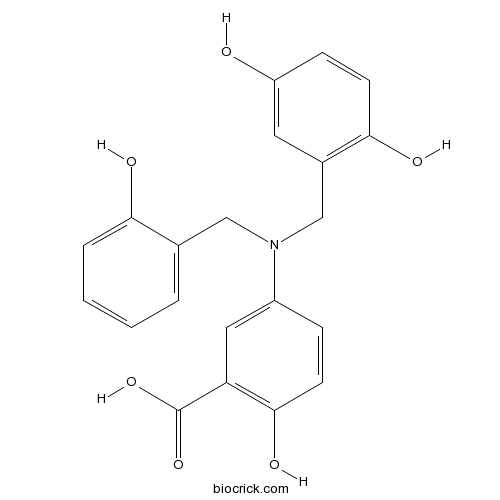
Lavendustin A
Lavendustin A (RG-14355), isolated from Streptomyces Griseolavendus, is a potent, specific and ATP-competitive inhibitor of tyrosine kinase, with an IC50 of 11 ng/mL for EGFR-associated tyrosine kinase. It suppresses VEGF-induced angiogenesis and blocks the induction of LTPGABA-A.
-
BCC6702
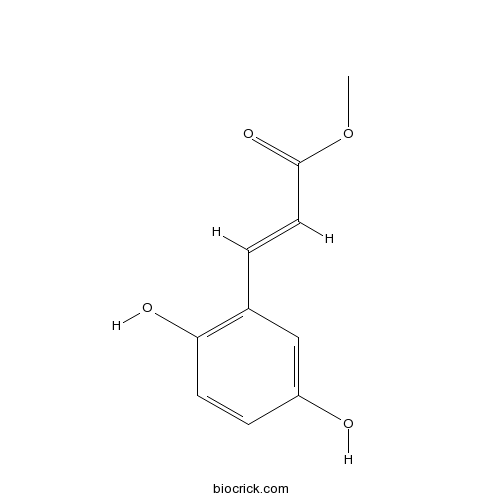
Methyl 2,5-dihydroxycinnamate
63177-57-1
-
BCC7434
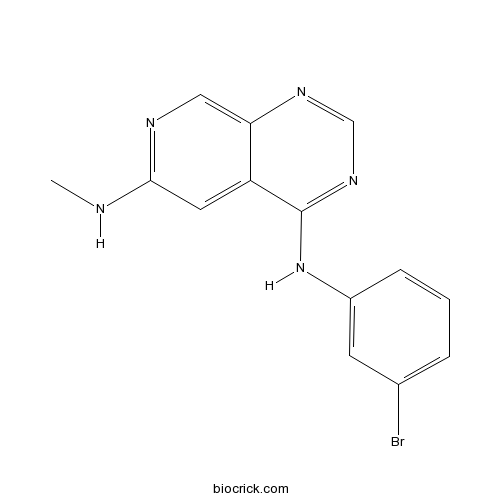
PD 158780
PD158780 is a potent EGFR family inhibitor with IC50s of 8 pM, 49, 52, 52 nM for EGFR, ErbB2, ErbB3, and ErbB4, respectively.
-
BCC7486
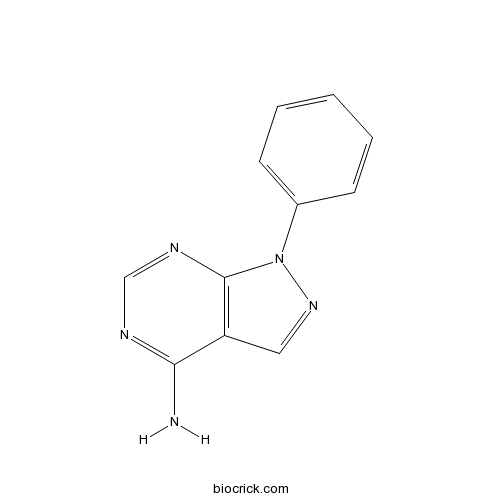
PP 3
5334-30-5
-
BCC4513
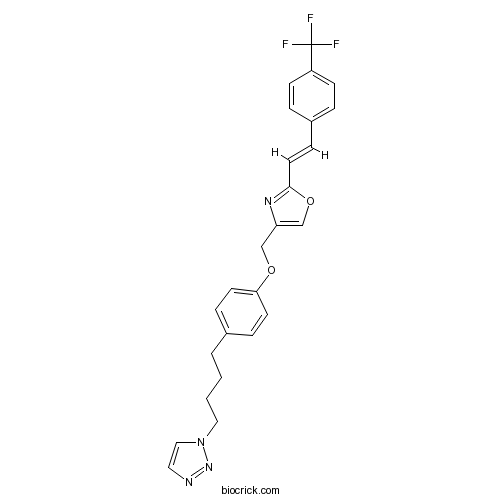
Mubritinib (TAK 165)
Mubritinib (TAK-165) is a potent and selective EGFR2/HER2 inhibitor with an IC50 of 6 nM.
-
BCC6703
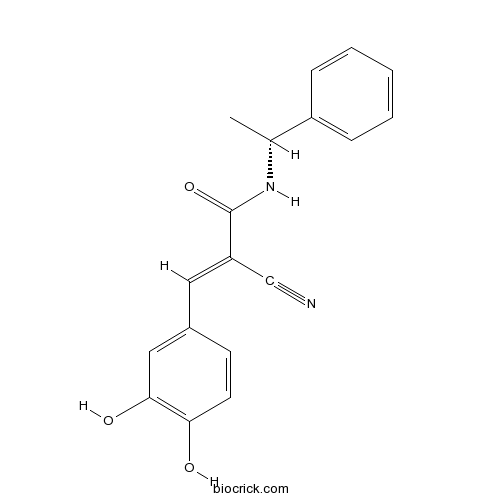
Tyrphostin B44, (-) enantiomer
133550-32-0
-
BCC6704
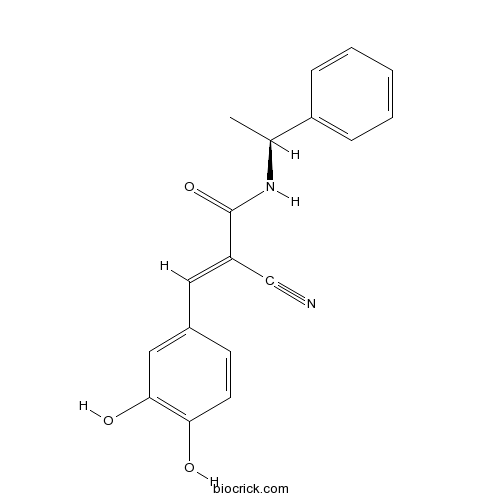
Tyrphostin B44, (+) enantiomer
133550-37-5
-
BCC2202
WHI-P154
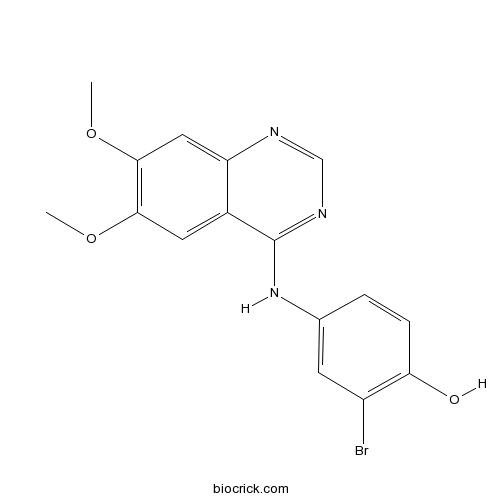
WHI-P154 is a potent EGFR inhibitor, and also modestly blocks JAK3, with IC50s of 4 nM and 1.8 μM, respectively.