Cancer Research
Cancer is a term used to define a group of diseases in which abnormal cells divide without control, are able to invade neighboring tissues/organs and metastasize. Cancer has been characterized by six hallmarks; self sufficiency in proliferative growth signals, insensitivity to growth inhibitors, evasion of apoptosis, limitless replicative potential, ability to develop blood vessels (angiogenesis), and tissue invasion and metastasis.
Cancer Research Products Areas
Products for Cancer Research - Page 41
- Cat.No. Product Name Information/Activity
-
BCC3689
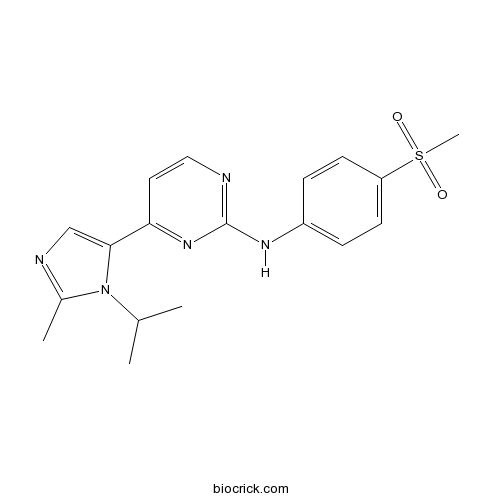
AZD-5438
AZD-5438 is a potent CDK1, CDK2, and CDK9 inhibitor, with IC50s of 16 nM, 6 nM, and 20 nM in cell-free assays, respectively. AZD-5438 shows less inhibition activity against GSK3β, CDK5 and CDK6 .
-
BCN5599
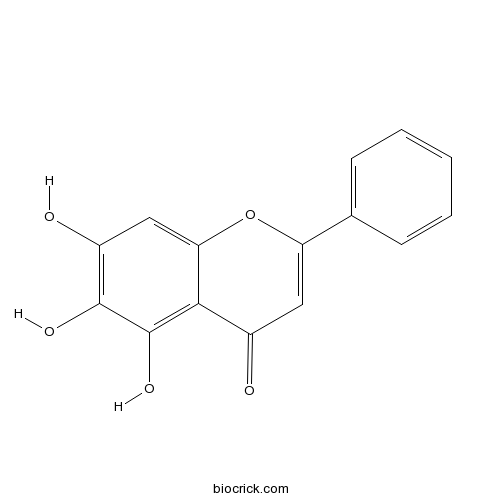
Baicalein
Baicalein (5,6,7-Trihydroxyflavone) is a xanthine oxidase inhibitor with an IC50 value of 3.12 mM.
-
BCC7935
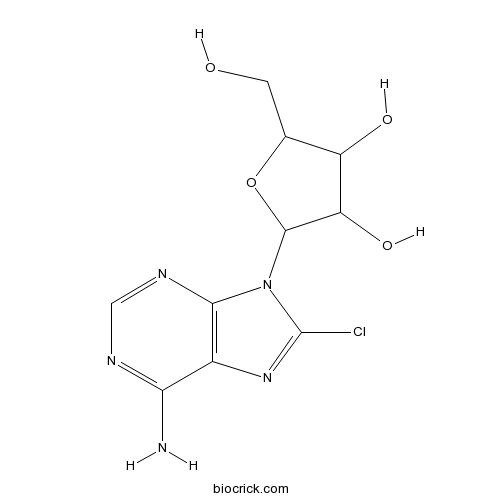
8-Chloroadenosine
34408-14-5
-
BCC4099
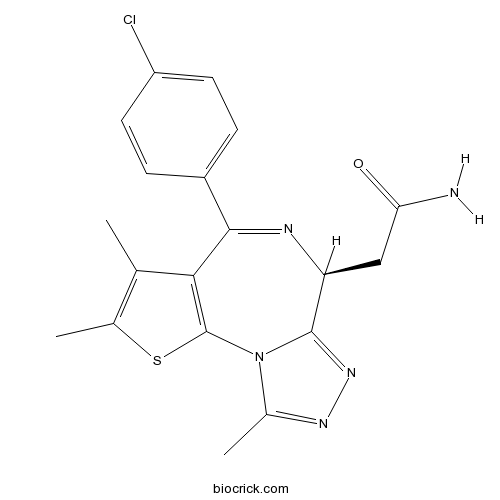
CPI-203
CPI-203 is a novel potent, selective and cell permeable inhibitor of BET bromodomain, with an IC50 value of appr 37 nM (BRD4 α-screen assay).
-
BCN5590
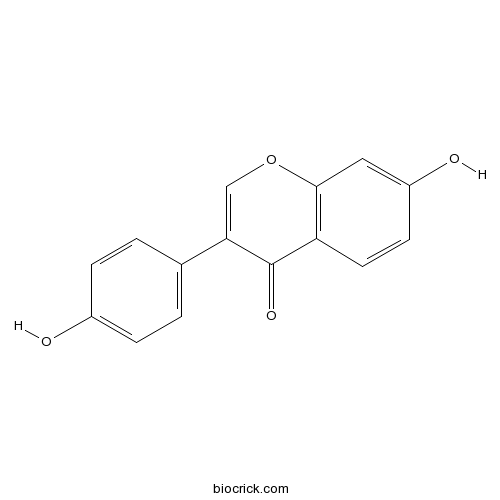
Daidzein
Daidzein is a soy isoflavone, which acts as a PPAR activator.
-
BCC1092
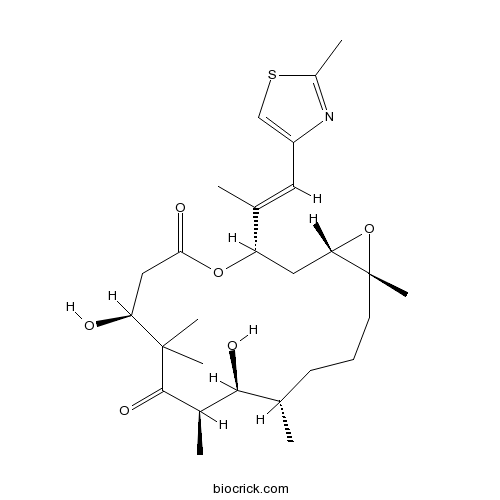
Epothilone B (EPO906, Patupilone)
Epothilone B is a microtubule stabilizer with a Ki of 0.71μM. It acts by binding to the αβ-tubulin heterodimer subunit which causes decreasing of αβ-tubulin dissociation.
-
BCC7185
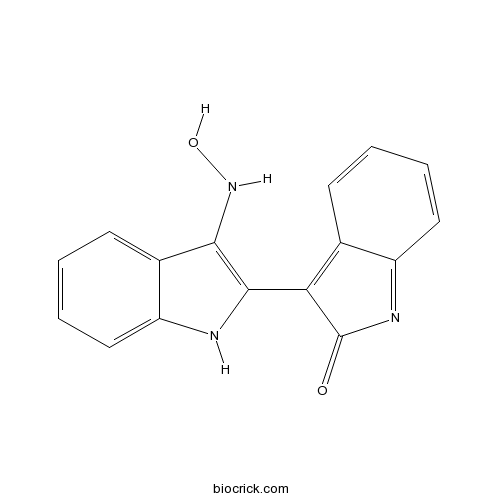
Indirubin-3'-oxime
Indirubin-3'-monoxime is a potent GSK-3β inhibitor, and weakly inhibits 5-Lipoxygenase, with IC50s of 22 nM and 7.8-10 µM, respectively; Indirubin-3'-monoxime also shows inhibitory activities against CDK5/p25 and CDK1/cyclin B, with IC50s of 100 and 180 nM.
-
BCC6298
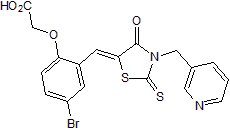
Skp2 Inhibitor C1
Skp2 Inhibitor C1(SKPin C1) is a specific small molecule inhibitor of Skp2-mediated p27 degradation, selectively inhibited Skp2-mediated p27 degradation by reducing p27 binding through key compound-receptor contacts.
-
BCC3678
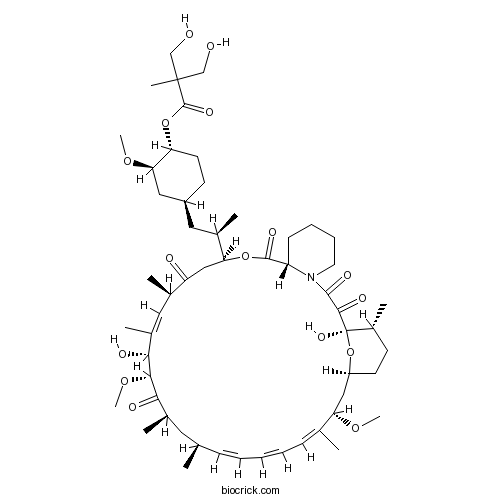
Temsirolimus
Temsirolimus is an inhibitor of mTOR with an IC50 of 1.76 μM.
-
BCC4604
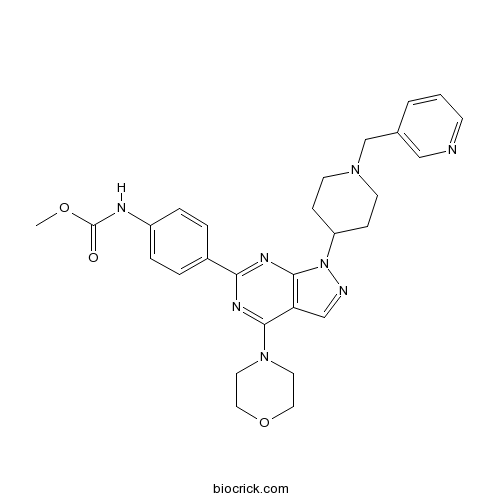
WYE-687
WYE-687 is an ATP-competitive mTOR inhibitor with an IC50 of 7 nM. WYE-687 concurrently inhibits activation of mTORC1 and mTORC2. WYE-687 also inhibits PI3Kα and PI3Kγ with IC50s of 81 nM and 3.11 μM, respectively.