
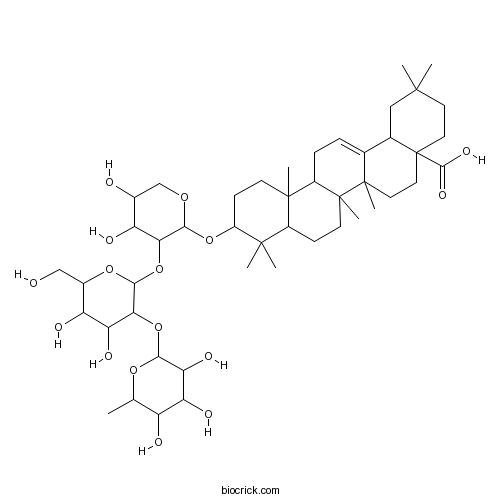
Tarasaponin VICAS# 59252-95-8 |

| Cas No. | 59252-95-8 | SDF | File under preparation. |
| PubChem ID | 162878.0 | Appearance | Powder |
| Formula | C41H64O13 | M.Wt | 764.95 |
| Type of Compound | Triterpenoids | Storage | Desiccate at -20°C |
| Solubility | Soluble in Chloroform,Dichloromethane,Ethyl Acetate,DMSO,Acetone,etc. | ||
| Chemical Name | (2S,3S,4R,5R,6R)-6-[[(3S,4aR,6aR,6bS,8aS,12aS,14aR,14bR)-8a-carboxy-4,4,6a,6b,11,11,14b-heptamethyl-1,2,3,4a,5,6,7,8,9,10,12,12a,14,14a-tetradecahydropicen-3-yl]oxy]-3-[(2S,3R,4R,5S)-3,4-dihydroxy-5-(hydroxymethyl)oxolan-2-yl]oxy-4,5-dihydroxyoxane-2-carboxylic acid | ||
| SMILES | CC1(CCC2(CCC3(C(=CCC4C3(CCC5C4(CCC(C5(C)C)OC6C(C(C(C(O6)C(=O)O)OC7C(C(C(O7)CO)O)O)O)O)C)C)C2C1)C)C(=O)O)C | ||
| Standard InChIKey | DDHCJXBGKMDIFP-LLUWHUROSA-N | ||
| Standard InChI | InChI=1S/C41H64O13/c1-36(2)14-16-41(35(49)50)17-15-39(6)20(21(41)18-36)8-9-24-38(5)12-11-25(37(3,4)23(38)10-13-40(24,39)7)52-34-29(46)27(44)30(31(54-34)32(47)48)53-33-28(45)26(43)22(19-42)51-33/h8,21-31,33-34,42-46H,9-19H2,1-7H3,(H,47,48)(H,49,50)/t21-,22-,23-,24+,25-,26-,27+,28+,29+,30-,31-,33-,34+,38-,39+,40+,41-/m0/s1 | ||
| General tips | For obtaining a higher solubility , please warm the tube at 37 ℃ and shake it in the ultrasonic bath for a while.Stock solution can be stored below -20℃ for several months. We recommend that you prepare and use the solution on the same day. However, if the test schedule requires, the stock solutions can be prepared in advance, and the stock solution must be sealed and stored below -20℃. In general, the stock solution can be kept for several months. Before use, we recommend that you leave the vial at room temperature for at least an hour before opening it. |
||
| About Packaging | 1. The packaging of the product may be reversed during transportation, cause the high purity compounds to adhere to the neck or cap of the vial.Take the vail out of its packaging and shake gently until the compounds fall to the bottom of the vial. 2. For liquid products, please centrifuge at 500xg to gather the liquid to the bottom of the vial. 3. Try to avoid loss or contamination during the experiment. |
||
| Shipping Condition | Packaging according to customer requirements(5mg, 10mg, 20mg and more). Ship via FedEx, DHL, UPS, EMS or other couriers with RT, or blue ice upon request. | ||
Quality Control & MSDS
3D structure
Package In Stock
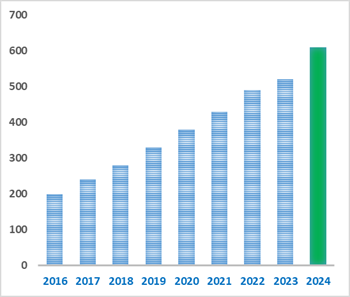
Number of papers citing our products

Tarasaponin VI Dilution Calculator
Tarasaponin VI Molarity Calculator
-
 Stipuleanoside R1Catalog No.: BCN9443CAS No.: 96627-79-1
-
 Zingibroside R1Catalog No.: BCN3433CAS No.: 80930-74-1
-
 Chikusetsusaponin IVCatalog No.: BCN2683CAS No.: 7518-22-1
-
 Chikusetsu Saponin IbCatalog No.: BCC8308CAS No.: 59252-87-8
-
 Tarasaponin IVCatalog No.: BCX1264CAS No.: 156980-31-3
-
 Stipuleanoside R2Catalog No.: BCX1258CAS No.: 96627-72-4
-
 Ginsenoside RoCatalog No.: BCN5937CAS No.: 34367-04-9
-
 Chikusetsusaponin IVaCatalog No.: BCN3432CAS No.: 51415-02-2
-
 Oleanolic acid -3-O-glucosyl(1-2)xylyl(1-3)glucosiduronic acidCatalog No.: BCX1544CAS No.: 1447508-78-2
-
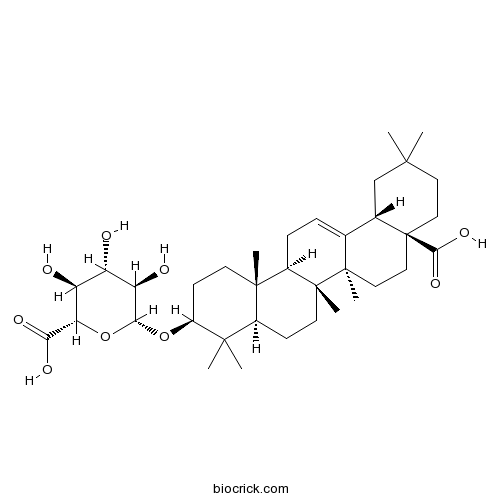 Calenduloside ECatalog No.: BCN9082CAS No.: 26020-14-4
-
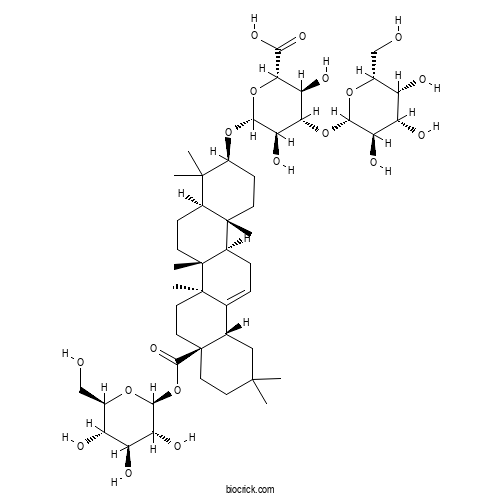 Calendulaglycoside CCatalog No.: BCX2874CAS No.: 26020-29-1
-
 Oleanolic acid-3-O-beta-D-glucopyranosyl (1→2)-alpha-L-arabinopyranosideCatalog No.: BCN1406CAS No.: 60213-69-6
-
 Araloside CCatalog No.: BCX1266CAS No.: 55446-15-6
-
 Elatoside ECatalog No.: BCN9430CAS No.: 156980-30-2
-
 Raddeanin ACatalog No.: BCN1084CAS No.: 89412-79-3
-
 Cyaonoside BCatalog No.: BCX1171CAS No.: 51161-58-1
-
 Momordin IICatalog No.: BCN3473CAS No.: 95851-41-5
-
 Pseudoginsenoside RT1Catalog No.: BCN2794CAS No.: 98474-74-9
-
 Cyaonoside ACatalog No.: BCX0751CAS No.: 110081-91-9
-
 Momordin IIcCatalog No.: BCX1543CAS No.: 96990-19-1
-
 Hederacolchiside A1Catalog No.: BCN6553CAS No.: 106577-39-3
-
 Araloside VCatalog No.: BCN2466CAS No.: 340963-86-2
-
 Momordin IcCatalog No.: BCN1216CAS No.: 96990-18-0
-
 PseudoginsenosideCatalog No.: BCX1023CAS No.: 96158-07-5
-
 Oleanolic acid 3-O-beta-D-glucosyl-(1->3)-alpha-L-rhamnosyl(1->2)-alpha-L-arabinosideCatalog No.: BCN8132CAS No.: 103956-33-8
-
 Chikusetsusaponin V methyl esterCatalog No.: BCN3472CAS No.: 34291-22-0
-
 Pulchinenoside E2Catalog No.: BCN8186CAS No.: 244202-36-6
-
 Araloside XCatalog No.: BCN2467CAS No.: 344911-90-6
-
 Ecliptasaponin ACatalog No.: BCN3843CAS No.: 78285-90-2
-
 Ecliptasaponin DCatalog No.: BCN2760CAS No.: 206756-04-9
-
 Ilexoside XLVIIICatalog No.: BCX1335CAS No.: 129095-76-7
| 1 mg | 5 mg | 10 mg | 20 mg | 25 mg | |
| 1 mM | 1.3073 mL | 6.5364 mL | 13.0727 mL | 26.1455 mL | 32.6819 mL |
| 5 mM | 0.2615 mL | 1.3073 mL | 2.6145 mL | 5.2291 mL | 6.5364 mL |
| 10 mM | 0.1307 mL | 0.6536 mL | 1.3073 mL | 2.6145 mL | 3.2682 mL |
| 50 mM | 0.0261 mL | 0.1307 mL | 0.2615 mL | 0.5229 mL | 0.6536 mL |
| 100 mM | 0.0131 mL | 0.0654 mL | 0.1307 mL | 0.2615 mL | 0.3268 mL |
| * Note: If you are in the process of experiment, it's necessary to make the dilution ratios of the samples. The dilution data above is only for reference. Normally, it's can get a better solubility within lower of Concentrations. | |||||
- Iodixanol Impurity C
Catalog No.:BCX1205
CAS No.:171897-74-8
- Isoproprotogracillin B
Catalog No.:BCX1204
CAS No.:117457-34-8
- 8-Keto-berberine
Catalog No.:BCX1203
CAS No.:81397-08-2
- Tigogenin lactone
Catalog No.:BCX1202
CAS No.:514-33-0
- 21-keto-gypenoside A
Catalog No.:BCX1201
CAS No.:1392136-41-2
- Alltride
Catalog No.:BCX1200
CAS No.:2050-87-5
- 4α-Phorbol
Catalog No.:BCX1199
CAS No.:26241-63-4
- Markogenin
Catalog No.:BCX1198
CAS No.:562-35-6
- Resinacein C
Catalog No.:BCX1197
CAS No.:1309931-92-7
- Complanatuside 6"-malonate
Catalog No.:BCX1196
CAS No.:2089462-18-8
- Taccalonolide C
Catalog No.:BCX1195
CAS No.:117803-96-0
- Syringopicroside
Catalog No.:BCX1194
CAS No.:29118-80-7
- Crocin IV
Catalog No.:BCX1207
CAS No.:57710-64-2
- Rhamnetin-3-O-β-D-Glucoside
Catalog No.:BCX1208
CAS No.:27875-34-9
- Ergosta-7,22,24(28)-trien-3β-ol
Catalog No.:BCX1209
CAS No.:36680-39-4
- N-Deacetyllappaconitine
Catalog No.:BCX1210
CAS No.:11033-64-0
- Ergosterol Acetate
Catalog No.:BCX1211
CAS No.:2418-45-3
- 6''-Acetylhyperin
Catalog No.:BCX1212
CAS No.:72659-75-7
- Ethyl linoleate
Catalog No.:BCX1213
CAS No.:544-35-4
- Hydroxy-ε-sanshool
Catalog No.:BCX1214
CAS No.:252193-26-3
- Dihydrooroxylin A-7-O-β-D-glucuronide
Catalog No.:BCX1215
CAS No.:1370002-08-6
- α-D-altro-3-Heptulofuranose
Catalog No.:BCX1216
CAS No.:25545-06-6
- Linocinnamarin
Catalog No.:BCX1217
CAS No.:554-87-0
- Panaxcerol C
Catalog No.:BCX1218
CAS No.:63180-02-9
Novel glycosidase from Paenibacillus lactis 154 hydrolyzing the 28-O-beta-D-glucopyranosyl ester bond of oleanane-type saponins.[Pubmed:38573330]
Appl Microbiol Biotechnol. 2024 Apr 4;108(1):282.
Oleanane-type ginsenosides are a class of compounds with remarkable pharmacological activities. However, the lack of effective preparation methods for specific rare ginsenosides has hindered the exploration of their pharmacological properties. In this study, a novel glycoside hydrolase PlGH3 was cloned from Paenibacillus lactis 154 and heterologous expressed in Escherichia coli. Sequence analysis revealed that PlGH3 consists of 749 amino acids with a molecular weight of 89.5 kDa, exhibiting the characteristic features of the glycoside hydrolase 3 family. The enzymatic characterization results of PlGH3 showed that the optimal reaction pH and temperature was 8 and 50 degrees C by using p-nitrophenyl-beta-D-glucopyranoside as a substrate, respectively. The K(m) and k(cat) values towards ginsenoside Ro were 79.59 +/- 3.42 microM and 18.52 s(-1), respectively. PlGH3 exhibits a highly specific activity on hydrolyzing the 28-O-beta-D-glucopyranosyl ester bond of oleanane-type saponins. The mechanism of hydrolysis specificity was then presumably elucidated through molecular docking. Eventually, four kinds of rare oleanane-type ginsenosides (calenduloside E, pseudoginsenoside RP1, zingibroside R1, and Tarasaponin VI) were successfully prepared by biotransforming total saponins extracted from Panax japonicus. This study contributes to understanding the mechanism of enzymatic hydrolysis of the GH3 family and provides a practical route for the preparation of rare oleanane-type ginsenosides through biotransformation. KEY POINTS: * The glucose at C-28 in oleanane-type saponins can be directionally hydrolyzed. * Mechanisms to interpret PlGH3 substrate specificity by molecular docking. * Case of preparation of low-sugar alternative saponins by directed hydrolysis.

Calcutta University

University of Minnesota

University of Maryland School of Medicine

University of Illinois at Chicago

The Ohio State University

University of Zurich

Harvard University

Colorado State University

Auburn University

Yale University

Worcester Polytechnic Institute

Washington State University

Stanford University

University of Leipzig

Universidade da Beira Interior

The Institute of Cancer Research

Heidelberg University

University of Amsterdam

University of Auckland

TsingHua University

The University of Michigan

Miami University

DRURY University

Jilin University

Fudan University

Wuhan University

Sun Yat-sen University

Universite de Paris

Deemed University

Auckland University

The University of Tokyo

Korea University