
Isorhamnetin 3-glucuronideCAS# 36687-76-0 |
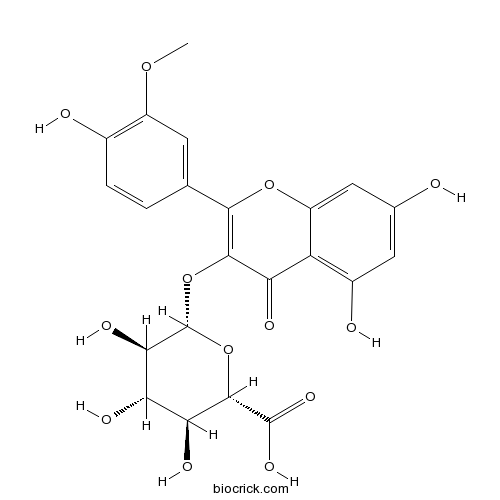
| Cas No. | 36687-76-0 | SDF | File under preparation. |
| PubChem ID | 5491630 | Appearance | Yellow Powder |
| Formula | C22H20O13 | M.Wt | 492.39 |
| Type of Compound | Flavonoids | Storage | Desiccate at -20°C |
| Solubility | Soluble in Chloroform,Dichloromethane,Ethyl Acetate,DMSO,Acetone,etc. | ||
| Chemical Name | (2S,3S,4S,5R,6S)-6-[5,7-dihydroxy-2-(4-hydroxy-3-methoxyphenyl)-4-oxochromen-3-yl]oxy-3,4,5-trihydroxyoxane-2-carboxylic acid | ||
| SMILES | COC1=C(C=CC(=C1)C2=C(C(=O)C3=C(C=C(C=C3O2)O)O)OC4C(C(C(C(O4)C(=O)O)O)O)O)O | ||
| Standard InChIKey | VVZWHOMBDMMRSC-NTKSAMNMSA-N | ||
| Standard InChI | InChI=1S/C22H20O13/c1-32-11-4-7(2-3-9(11)24)18-19(14(26)13-10(25)5-8(23)6-12(13)33-18)34-22-17(29)15(27)16(28)20(35-22)21(30)31/h2-6,15-17,20,22-25,27-29H,1H3,(H,30,31)/t15-,16-,17+,20-,22+/m0/s1 | ||
| General tips | For obtaining a higher solubility , please warm the tube at 37 ℃ and shake it in the ultrasonic bath for a while.Stock solution can be stored below -20℃ for several months. We recommend that you prepare and use the solution on the same day. However, if the test schedule requires, the stock solutions can be prepared in advance, and the stock solution must be sealed and stored below -20℃. In general, the stock solution can be kept for several months. Before use, we recommend that you leave the vial at room temperature for at least an hour before opening it. |
||
| About Packaging | 1. The packaging of the product may be reversed during transportation, cause the high purity compounds to adhere to the neck or cap of the vial.Take the vail out of its packaging and shake gently until the compounds fall to the bottom of the vial. 2. For liquid products, please centrifuge at 500xg to gather the liquid to the bottom of the vial. 3. Try to avoid loss or contamination during the experiment. |
||
| Shipping Condition | Packaging according to customer requirements(5mg, 10mg, 20mg and more). Ship via FedEx, DHL, UPS, EMS or other couriers with RT, or blue ice upon request. | ||
Quality Control & MSDS
3D structure
Package In Stock
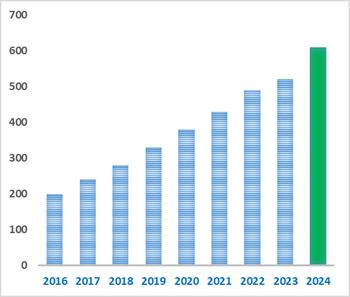
Number of papers citing our products
| Description | 1. Isorhamnetin - 3 -O -glucuronide exerts anti-inflammatory activity by increasing heme oxygenase-1 (HO-1) expression and by suppressing Jun N-terminal kinase (JNK) and p38 signaling pathways in LPS-challenged RAW264.7 macrophage cells. 2. Isorhamnetin-3-glucuronide(1 mg/kg i.v.) can progressively reduce mean blood pressure (MBP), measured in conscious spontaneously hypertensive rats (SHR). 3. Isorhamnetin 3-glucuronide can inhibit vascular cell adhesion molecule-1 (VCAM-1) cell surface expression at 2 micromol/L, indicates that it can inhibit the expression of key molecules involved in monocyte recruitment during the early stages of atherosclerosis at physiological concentrations. |
| Targets | HO-1 | JNK | p38MAPK |

Isorhamnetin 3-glucuronide Dilution Calculator
Isorhamnetin 3-glucuronide Molarity Calculator
-
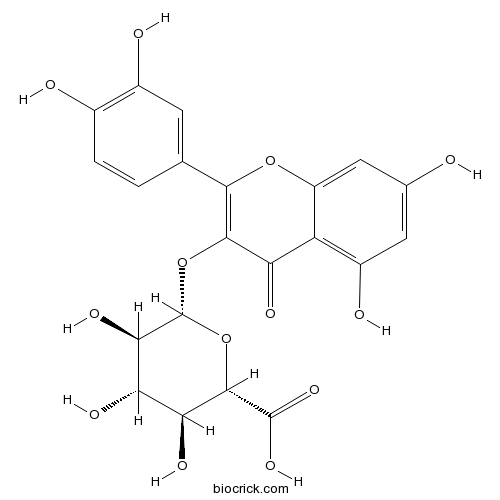 Quercetin-3-O-glucuronideCatalog No.: BCN3149CAS No.: 22688-79-5
 -
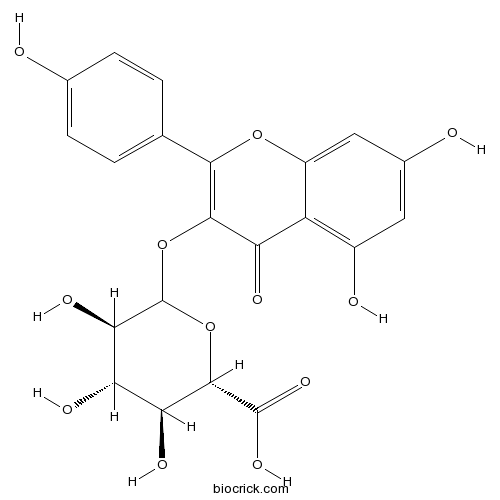 Kaempferol-3-beta-O-glucuronideCatalog No.: BCN2503CAS No.: 22688-78-4
 -
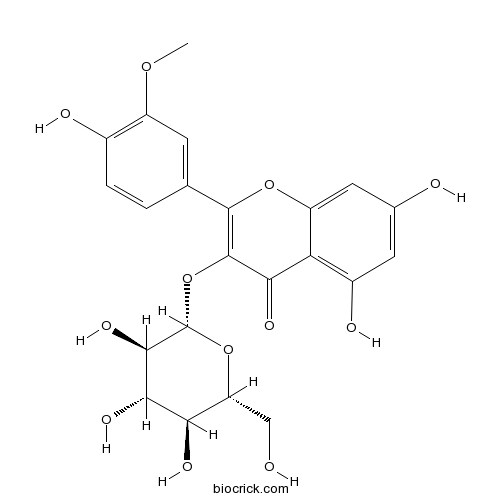 Isorhamnetin-3-O-beta-D-GlucosideCatalog No.: BCN1247CAS No.: 5041-82-7
 -
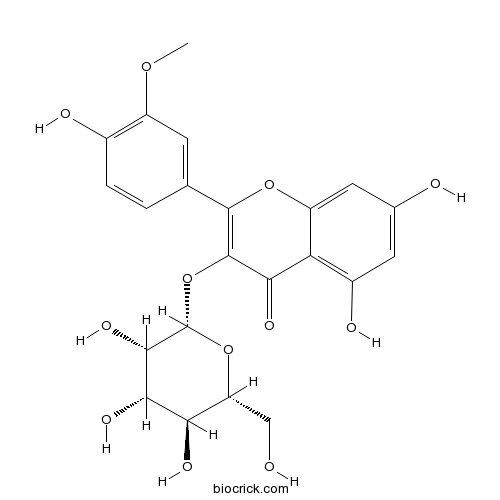 Isorhamnetin-3-O-galactosideCatalog No.: BCC8190CAS No.: 6743-92-6
 -
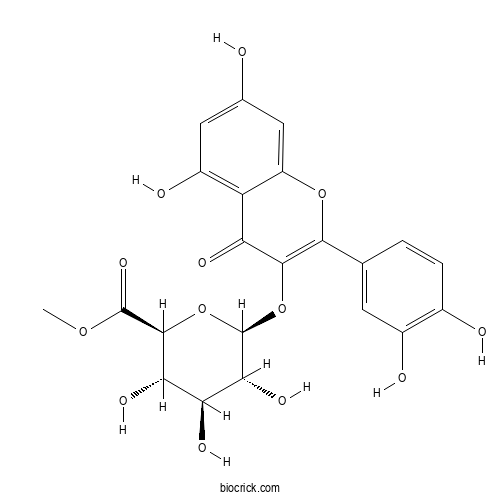 Quercetin 3-O-β-D-Glucuronide 6''-Methyl EsterCatalog No.: BCX0828CAS No.: 79543-28-5
 -
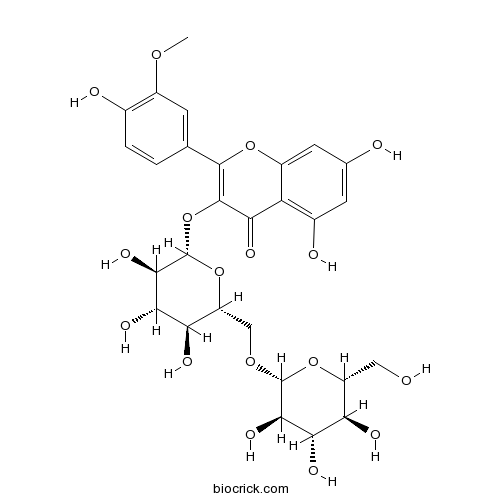 AstragalosideCatalog No.: BCN5959CAS No.: 17429-69-5
 -
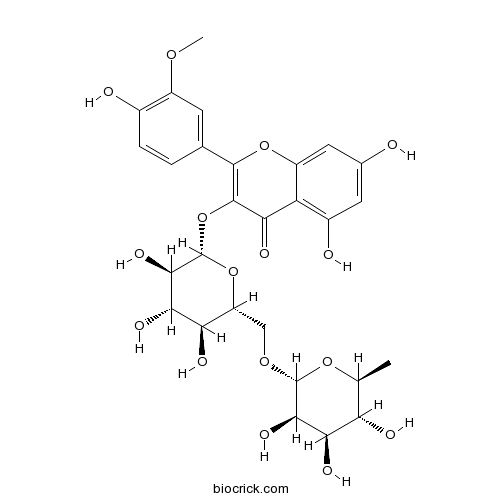 NarcissosideCatalog No.: BCN1263CAS No.: 604-80-8
 -
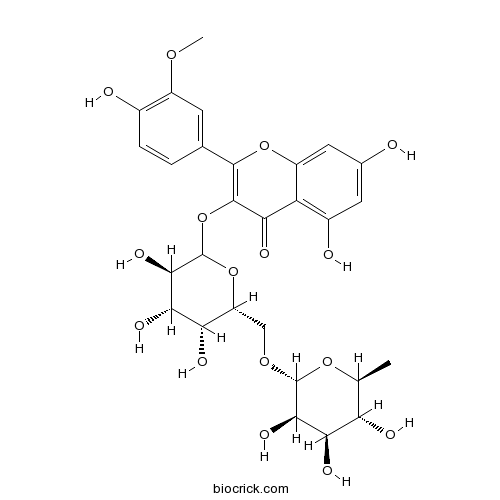 Isorhamnetin 3-robinobiosideCatalog No.: BCN8693CAS No.: 53584-69-3
 -
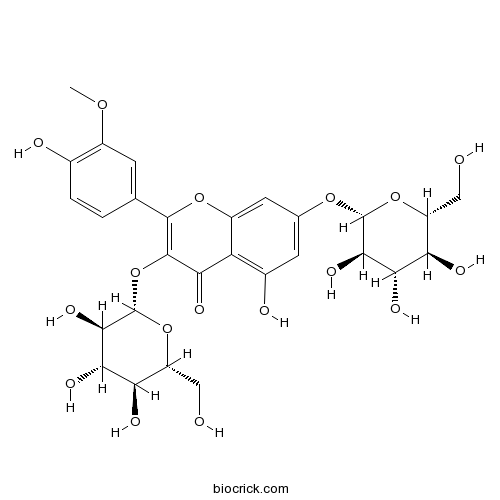 Isorhamnetin 3,7-O-diglucosideCatalog No.: BCN8828CAS No.: 6758-51-6
 -
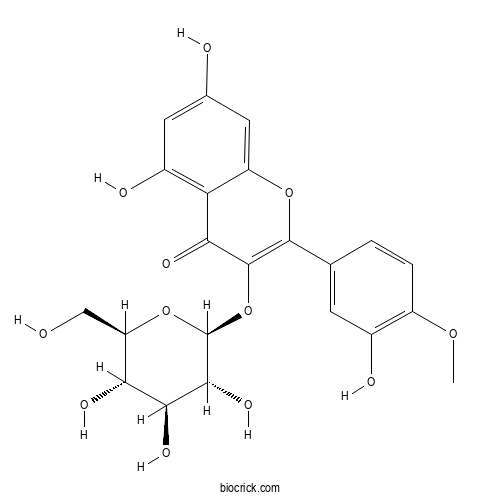 TamarixinCatalog No.: BCN0692CAS No.: 27542-39-8
 -
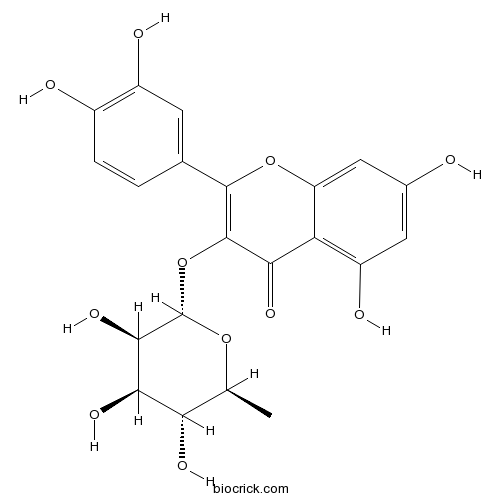 QuercitrinCatalog No.: BCN5665CAS No.: 522-12-3
 -
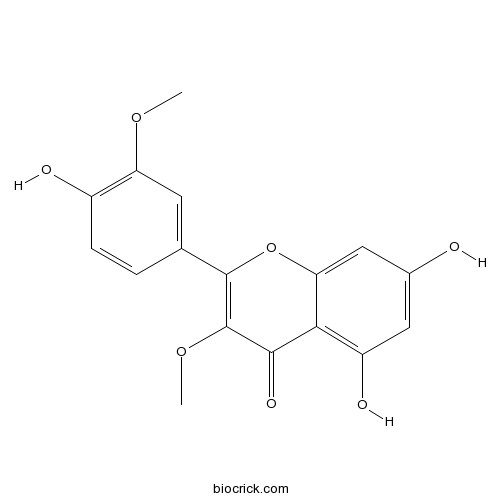 Quercetin 3,3'-dimethyl etherCatalog No.: BCN7781CAS No.: 4382-17-6
 -
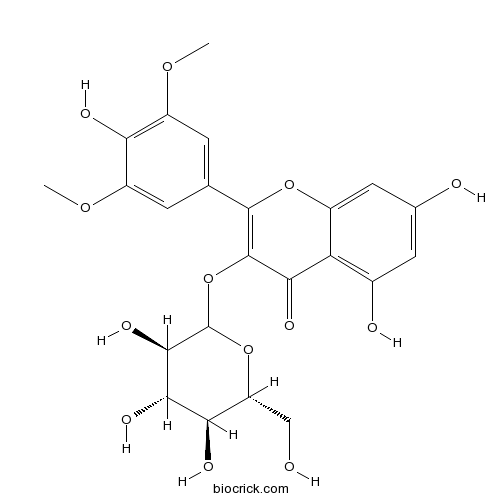 Syringetin-3-O-glucosideCatalog No.: BCN2610CAS No.: 40039-49-4
 -
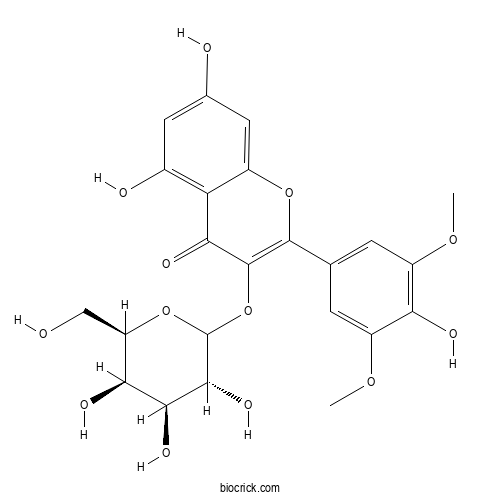 Syringetin 3-O-galactosideCatalog No.: BCN0139CAS No.: 55025-56-4
 -
 AzaleinCatalog No.: BCX2071CAS No.: 29028-02-2
 -
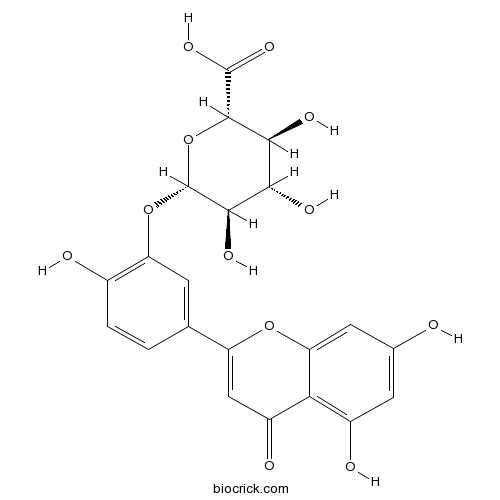 Luteolin-3-O-beta-D-glucuronideCatalog No.: BCN3826CAS No.: 53527-42-7
 -
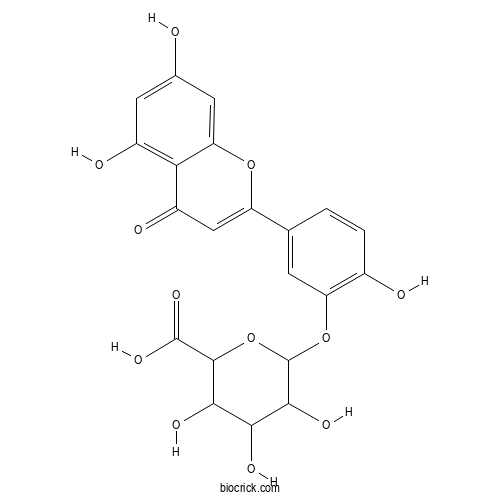 Luteolin 3'-galacturonideCatalog No.: BCX1623CAS No.: 56317-12-5
 -
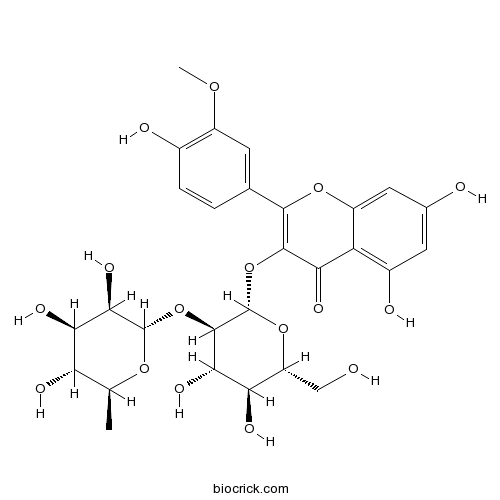 Isorhamnetin-3-O-neohespeidosideCatalog No.: BCN1234CAS No.: 55033-90-4
 -
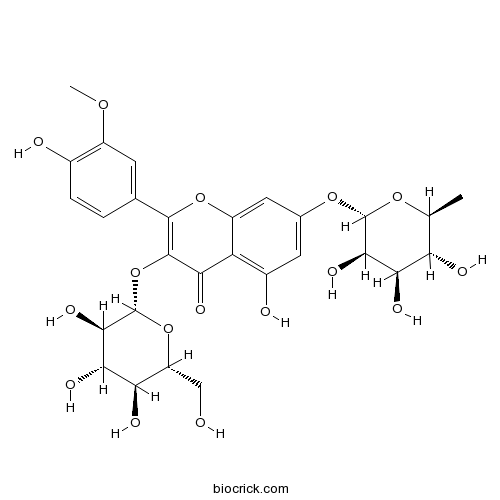 Isorhamnetin 3-glucoside-7-rhamnosideCatalog No.: BCN1528CAS No.: 17331-71-4
 -
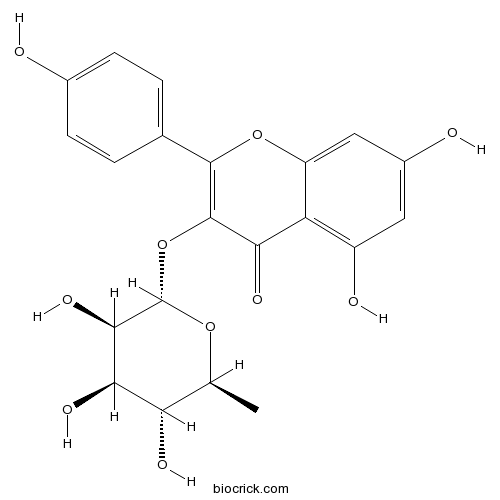 AfzelinCatalog No.: BCN5573CAS No.: 482-39-3
 -
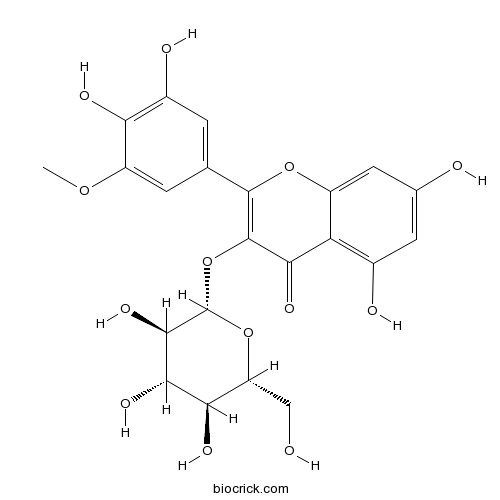 Laricitrin 3-O-glucosideCatalog No.: BCN8149CAS No.: 39986-90-8
 -
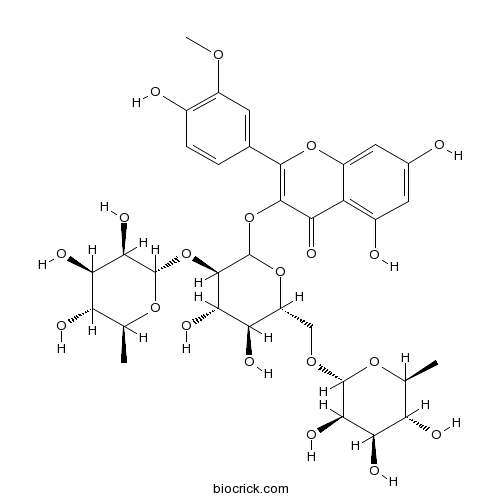 TyphaneosideCatalog No.: BCN4994CAS No.: 104472-68-6
 -
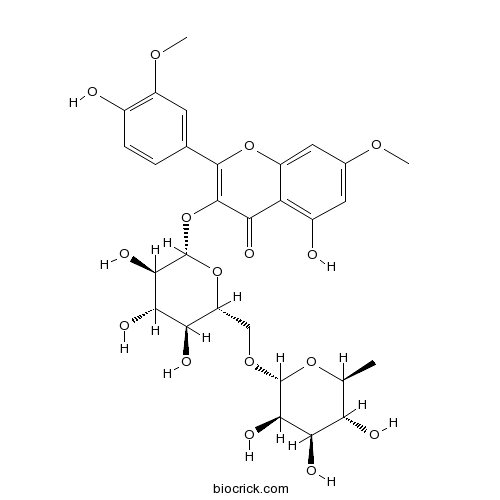 OmbuosideCatalog No.: BCN3711CAS No.: 20188-85-6
 -
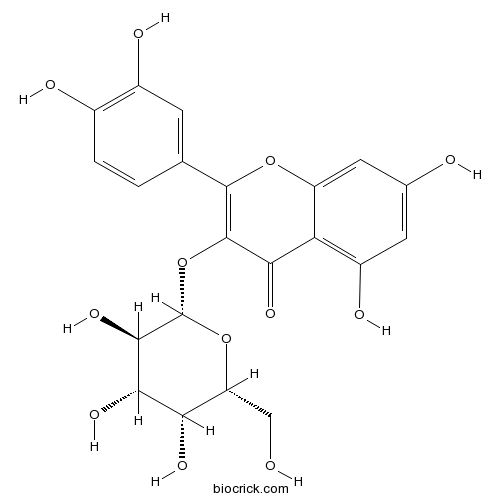 HyperosideCatalog No.: BCN5570CAS No.: 482-36-0
 -
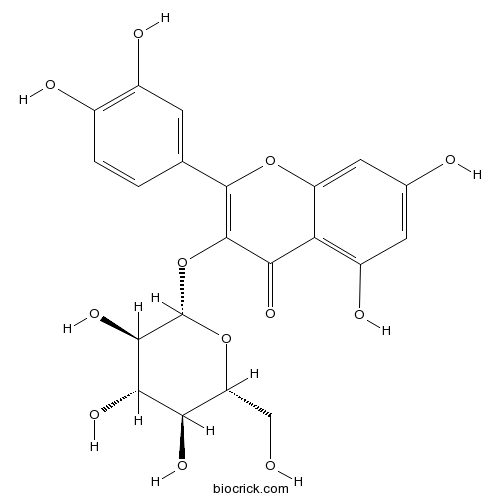 IsoquercitrinCatalog No.: BCN5569CAS No.: 482-35-9
 -
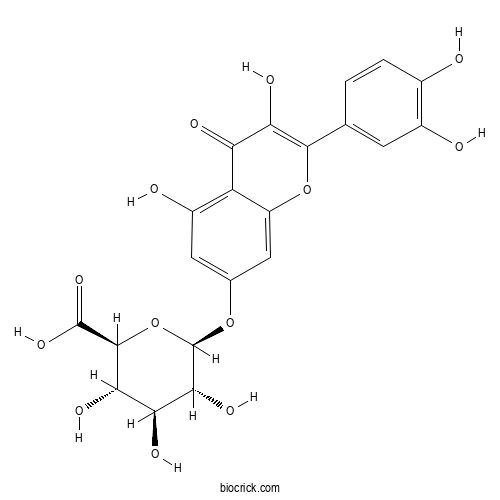 Quercetin 7-O-glucuronideCatalog No.: BCX0803CAS No.: 38934-20-2
 -
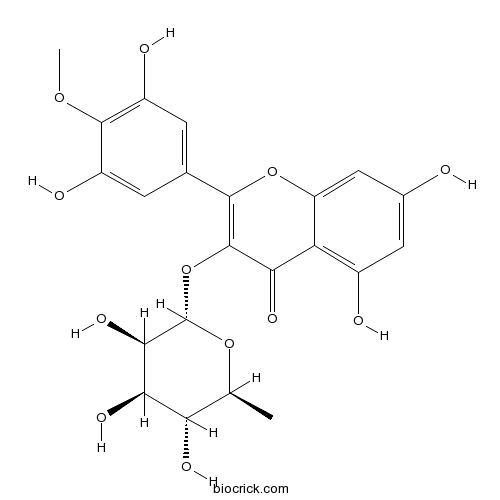 MearnsitrinCatalog No.: BCN5220CAS No.: 30484-88-9
 -
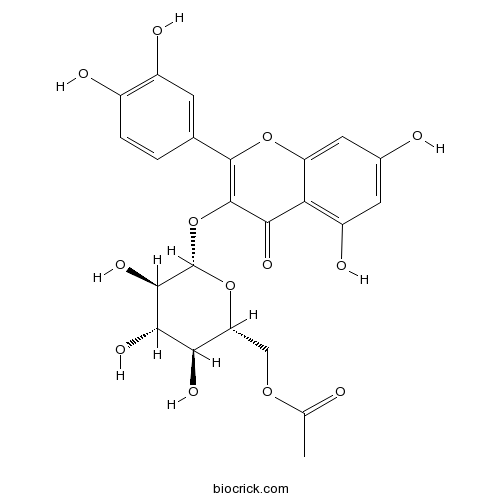 Quercetin-3-O-glucose-6'-acetateCatalog No.: BCN6545CAS No.: 54542-51-7
 -
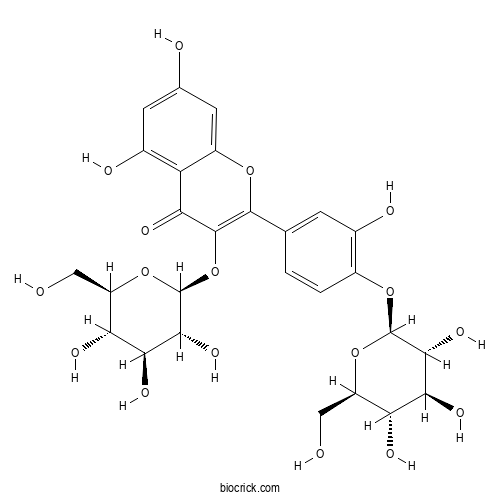 Quercetin 3,4'-diglucosideCatalog No.: BCN9741CAS No.: 29125-80-2
| 1 mg | 5 mg | 10 mg | 20 mg | 25 mg | |
| 1 mM | 2.0309 mL | 10.1546 mL | 20.3091 mL | 40.6182 mL | 50.7728 mL |
| 5 mM | 0.4062 mL | 2.0309 mL | 4.0618 mL | 8.1236 mL | 10.1546 mL |
| 10 mM | 0.2031 mL | 1.0155 mL | 2.0309 mL | 4.0618 mL | 5.0773 mL |
| 50 mM | 0.0406 mL | 0.2031 mL | 0.4062 mL | 0.8124 mL | 1.0155 mL |
| 100 mM | 0.0203 mL | 0.1015 mL | 0.2031 mL | 0.4062 mL | 0.5077 mL |
| * Note: If you are in the process of experiment, it's necessary to make the dilution ratios of the samples. The dilution data above is only for reference. Normally, it's can get a better solubility within lower of Concentrations. | |||||
- Pulchinenoside E
Catalog No.:BCN8165
CAS No.:366814-43-9
- Cussosaponin C
Catalog No.:BCN2895
CAS No.:366814-42-8
- Rivaroxaban
Catalog No.:BCC2292
CAS No.:366789-02-8
- 1-Hexadecanol
Catalog No.:BCC4616
CAS No.:36653-82-4
- Semialactone
Catalog No.:BCN5422
CAS No.:366450-46-6
- 1,4-Benzodioxan-2-carboxylic acid
Catalog No.:BCC8421
CAS No.:3663-80-7
- Mubritinib (TAK 165)
Catalog No.:BCC4513
CAS No.:366017-09-6
- AY 9944 dihydrochloride
Catalog No.:BCC3940
CAS No.:366-93-8
- Procarbazine HCl
Catalog No.:BCC4452
CAS No.:366-70-1
- H-Arg-OEt.2HCl
Catalog No.:BCC2860
CAS No.:36589-29-4
- Ac-Tyr-OEt.H2O
Catalog No.:BCC3121
CAS No.:36546-50-6
- Cycloheterophyllin
Catalog No.:BCN4640
CAS No.:36545-53-6
- Benzyl 2,4-dihydroxyphenyl ketone
Catalog No.:BCC8867
CAS No.:3669-41-8
- 8-Shogaol
Catalog No.:BCN3266
CAS No.:36700-45-5
- Beta-Solamarine
Catalog No.:BCN2693
CAS No.:3671-38-3
- Boc-Phe-Osu
Catalog No.:BCC2601
CAS No.:3674-06-4
- Boc-D-Phe-Osu
Catalog No.:BCC2600
CAS No.:3674-18-8
- Lurasidone
Catalog No.:BCC9013
CAS No.:367514-87-2
- Lurasidone HCl
Catalog No.:BCC4458
CAS No.:367514-88-3
- AR-M 1896
Catalog No.:BCC5931
CAS No.:367518-31-8
- 10-Shogaol
Catalog No.:BCN3267
CAS No.:36752-54-2
- 4-Aminophthalimide
Catalog No.:BCC8689
CAS No.:3676-85-5
- MRS 2279
Catalog No.:BCC5880
CAS No.:367909-40-8
- Ribavirin
Catalog No.:BCC4935
CAS No.:36791-04-5
Glucuronidated quercetin lowers blood pressure in spontaneously hypertensive rats via deconjugation.[Pubmed:22427863]
PLoS One. 2012;7(3):e32673.
BACKGROUND: Chronic oral quercetin reduces blood pressure and restores endothelial dysfunction in hypertensive animals. However, quercetin (aglycone) is usually not present in plasma, because it is rapidly metabolized into conjugated, mostly inactive, metabolites. The aim of the study is to analyze whether deconjugation of these metabolites is involved in the blood pressure lowering effect of quercetin. METHODOLOGY/PRINCIPAL FINDINGS: We have analyzed the effects on blood pressure and vascular function in vitro of the conjugated metabolites of quercetin (quercetin-3-glucuronide, Q3GA; isorhamnetin-3-glucuronide, I3GA; and quercetin-3'-sulfate, Q3'S) in spontaneously hypertensive rats (SHR). Q3GA and I3GA (1 mg/kg i.v.), but not Q3'S, progressively reduced mean blood pressure (MBP), measured in conscious SHR. The hypotensive effect of Q3GA was abolished in SHR treated with the specific inhibitor of beta-glucuronidase, saccharic acid 1,4-lactone (SAL, 10 mg/ml). In mesenteric arteries, unlike quercetin, Q3GA had no inhibitory effect in the contractile response to phenylephrine after 30 min of incubation. However, after 1 hour of incubation Q3GA strongly reduced this contractile response and this effect was prevented by SAL. Oral administration of quercetin (10 mg/Kg) induced a progressive decrease in MBP, which was also suppressed by SAL. CONCLUSIONS: Conjugated metabolites are involved in the in vivo antihypertensive effect of quercetin, acting as molecules for the plasmatic transport of quercetin to the target tissues. Quercetin released from its glucuronidated metabolites could be responsible for its vasorelaxant and hypotensive effect.

Calcutta University

University of Minnesota

University of Maryland School of Medicine

University of Illinois at Chicago

The Ohio State University

University of Zurich

Harvard University

Colorado State University

Auburn University

Yale University

Worcester Polytechnic Institute

Washington State University

Stanford University

University of Leipzig

Universidade da Beira Interior

The Institute of Cancer Research

Heidelberg University

University of Amsterdam

University of Auckland

TsingHua University

The University of Michigan

Miami University

DRURY University

Jilin University

Fudan University

Wuhan University

Sun Yat-sen University

Universite de Paris

Deemed University

Auckland University

The University of Tokyo

Korea University